Fake News and Disinformation: Comparison
Keywords: Fake News, Disinformation, Deception, Intent to Deceive

Introduction of Fake News
The concept of fake news has become an important topic in the modern media landscape. However, it lacks a universally accepted definition and definitions vary across scholarship. Molina et al. (2021) suggest that the concept of fake news is not the same as false news and that we must look deeper to find its specific, distinguishing features. They go on to identify seven types of content that are often associated with the concept of fake news. Those categories are false news, polarized content, satire, misreporting, commentary, persuasive information, and citizen journalism. They also use real news as a comparison. These types of content are often associated with fake news, but this does not mean that all content of each type falls into the realm of fake news. Egelhofer and Lecheler (2019) identified three characteristics of the “fake news genre” and those are low facticity, journalistic format, and intention to deceive (p. 99). They go on to say that a message should only be classified as fake news when it meets all three of those characteristics. A related concept that is often confused with or spoken about with fake news is disinformation.
Image provided by Unsplash
Introduction of Disinformation
Fetzer (2004) defines disinformation as the “distribution, assertion, or dissemination of false, mistaken, or misleading information in an intentional, deliberate, or purposeful effort to mislead, deceive, or confuse” (p. 231). Fetzer (2004) distinguishes disinformation from misinformation by saying that disinformation must involve intent to deceive and that false information alone does not constitute disinformation. Egelhofer and Lecheler (2019) provide a connection between disinformation and fake news by saying “if disinformation is packaged in a journalistic format, it emerges as fake news” (p. 102).
Fake News vs. Disinformation: Deception and Ambiguity
The concepts of fake news and disinformation are closely related. We can distinguish the two by looking at what constitutes both concepts. Disinformation is found in many different forms and does not necessarily need to be in a journalistic format. Fetzer (2004) talks about how disinformation can occur in “political, editorial, and advertising contexts” (p. 231), while Egelhofer and Lecheler (2019) distinguish fake news by its journalistic format. This distinction between the two is primarily in the scope of each. Disinformation is intentionally misleading information, regardless of the presentation of that information. On the other hand, fake news is specifically characterized by its journalistic presentation. Another way to think of this is that fake news falls within the concept of disinformation, but not all disinformation is fake news.
Another difference between these two concepts is the conceptual ambiguity of each. Fetzer (2004) gives us an explicit definition of disinformation in that it must include an intent to deceive. However, with fake news there is much more ambiguity around what qualifies as being fake news. Molina et al. (2021) call for further explication on the concept of fake news and say we must go beyond the broader definitions. Further refining the definition of fake news would help researchers in operationalizing the concept and approaching it with more understanding.
Fake News vs. Disinformation: Intent to Deceive
There is much overlap in the concepts of fake news and disinformation. Egelhofer and Lecheler (2019) describe fake news to include the intent to deceive. Fetzer (2004) says that disinformation must have the intent to deceive to qualify as disinformation. So, we can see from these descriptions that one similarity between them is that both concepts include the intent to deceive to be qualified as such.
Conclusion
From our discussion of the concepts of fake news and disinformation above, we can see that they are closely related. Both concepts include an intent to deceive and false or misleading information. However, fake news specifically represents a narrower form of disinformation. The key distinction between them is the format in which they are presented. Fake news must be presented in a journalistic format, while disinformation can take place in many forms. This distinction is important because the better we understand these concepts, the more useful they become for operationalization in later research. This comparison exercise helped me better understand these concepts by clarifying what characteristics are required for a message to qualify as fake news or disinformation.
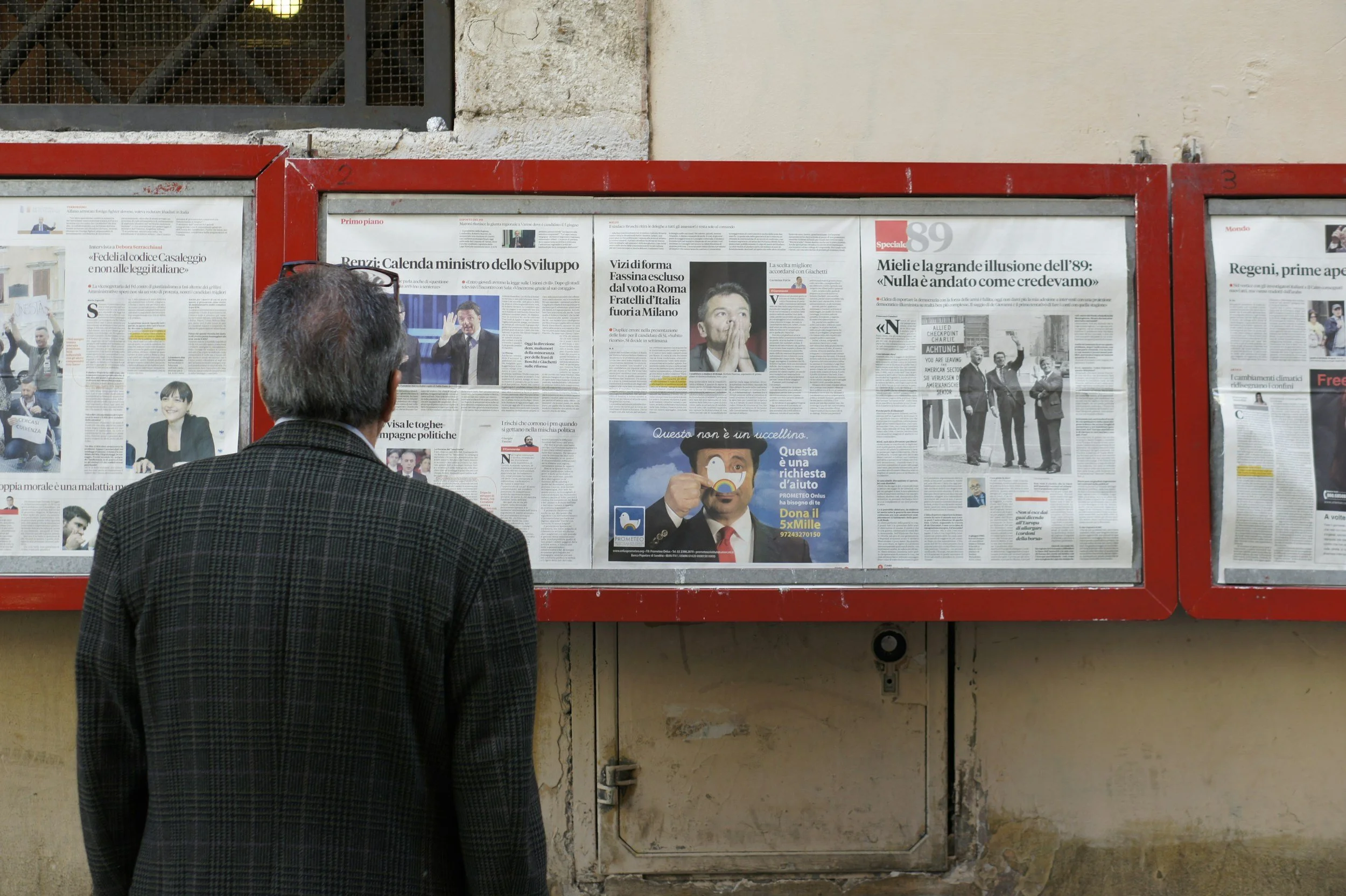
Image provided by Unsplash
References
Molina, M. D., Sundar, S. S., Le, T., & Lee, D. (2019). “fake news” is not simply false information: A concept explication and taxonomy of online content. American Behavioral Scientist, 65(2), 180–212. https://doi.org/10.1177/0002764219878224
Egelhofer, J. L., & Lecheler, S. (2019). Fake news as a two-dimensional phenomenon: A framework and research agenda. Annals of the International Communication Association, 43(2), 97–116. https://doi.org/10.1080/23808985.2019.1602782
Fetzer, J. H. (2004). Disinformation: The use of false information. Minds and Machines, 14(2), 231–240. https://doi.org/10.1023/b:mind.0000021683.28604.5b
